
1-805-484-2992
Quotes - Engineering - SalesCRITICAL SPACES & CENTRAL PLANTS
Chilled Water
That Never Stops
In most facilities, server rooms and similar critical spaces are cooled by CRAC or CRAH units at the room level, which in turn draw chilled water from a central chiller plant, such as an Advantage Titan or OACS system - the chiller itself isn't in the room, but the room's cooling is only as reliable as that plant and loop. Sizing the plant correctly, with the redundancy the facility's uptime requirement calls for, is what keeps the room-level units supplied.
Battery and UPS rooms have a related but distinct requirement: batteries have a fairly narrow temperature range for both safety and service life, and cooling that room reliably protects both the battery investment and the backup power system it supports.
The load in these spaces is continuous and it only grows. IT equipment runs around the clock, rack densities climb with every refresh, and a room that was comfortable at commissioning can be short of cooling two expansions later. Sizing the Advantage plant against the real IT load plus planned growth, rather than today's nameplate, is what keeps the room-level units supplied without a rebuild.
Redundancy is decided at the plant. N+1 and 2N arrangements, add-on modules that bring capacity online in steps, and a pump tank station that decouples fluid distribution from refrigeration are the tools that let a facility keep cooling while one unit is serviced.

Send us the current or planned IT load and any redundancy requirement, and we will help size the central chiller plant behind it - new build or expansion of an existing chilled-water loop.
Request a QuoteCOMMON APPLICATIONS

Server Room Cooling

UPS Room Cooling

Building HVAC

Redundant Cooling
A server room is only as reliable as the chilled-water plant feeding it. The CRAC and CRAH units move the air; the chiller plant, and the redundancy built into it, decides whether the room stays up.
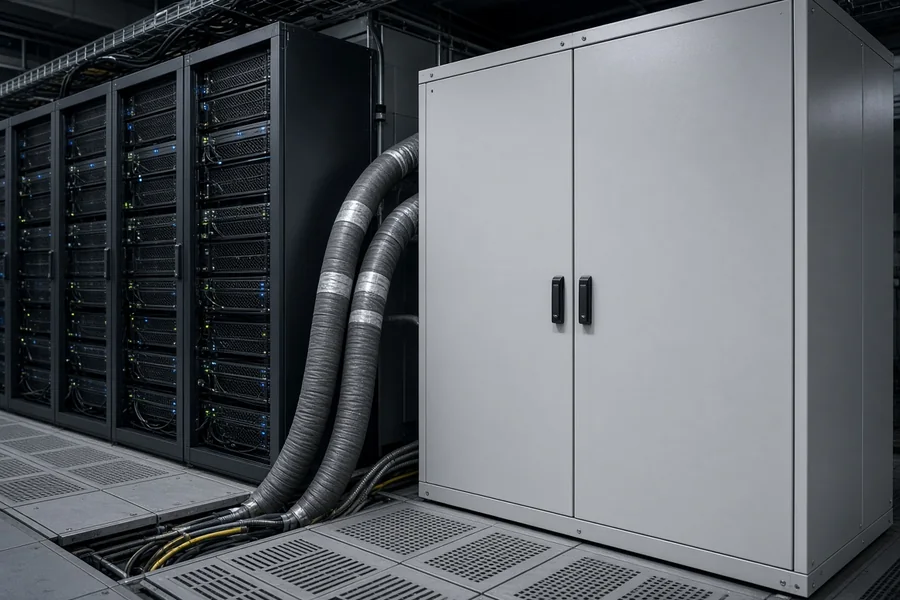
Server Room / CRAC Cooling
Central Chilled Water for Room Units
- Sized to the Real IT Load
- Headroom for Planned Growth
- N+1 or 2N at the Central Plant
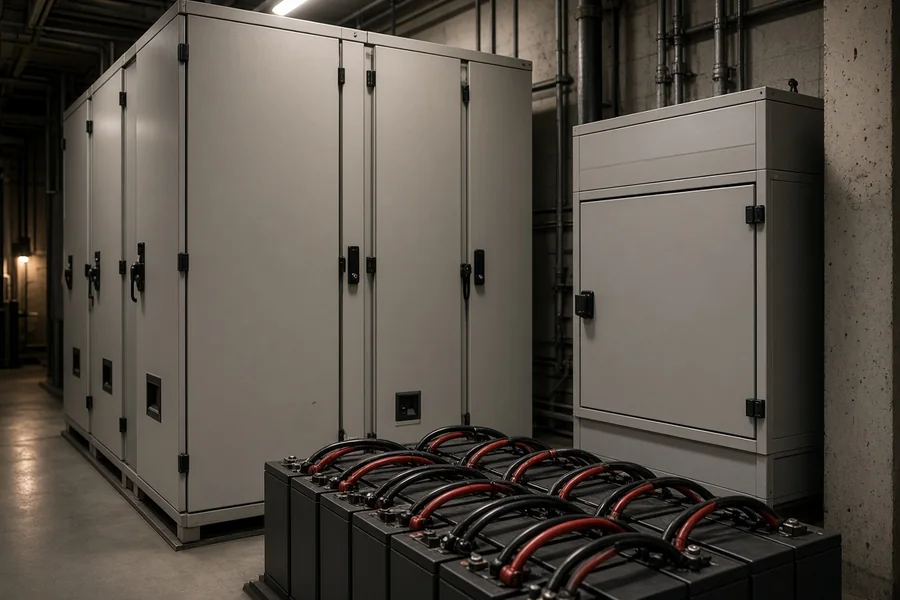
UPS & Battery Rooms
Stable Room Temperature for Battery Life
- Holds the Rated Battery Range
- Covers UPS and Charger Heat
- Reliability Matched to Backup Power
What Makes Data Center & Facility Cooling Different
Uptime
N+1 Standard
No Single Point Of Failure
A data center or critical facility rarely accepts a single chiller as the whole solution - redundancy, whether built into the unit or achieved by pairing two smaller units, is usually part of the spec from day one.
Setpoint
44-55°F
Chilled Water, Not Deep Cold
Server room and CRAC loops typically run a moderate chilled-water supply temperature rather than the sub-freezing setpoints common in process cooling - the goal is steady room-level temperature control, not an extreme low temperature.
Response
Fast Deployment
Temporary & Emergency Coverage
A cooling failure in an occupied data hall is a minutes-matter event. Portable units that can be staged and connected quickly - for a planned outage or an emergency backup - are as important as the permanent system.
Battery Life
Tight Room Control
UPS & Battery Rooms Run Warmer
Battery rooms are cooled to protect capacity and service life, not to hit a process fluid temperature - the target is usually a stable room ambient rather than the colder setpoints server halls run.
Sizing Data Center & Facility Cooling
Three numbers get a quote moving fast: the heat load in tons (or kW, we'll convert), the required chilled-water supply temperature, and how much redundancy the facility requires. Everything else - indoor vs. outdoor, air-cooled vs. water-cooled, portable vs. permanent - follows from those three.
Most single-room CRAC or edge-facility duty fits a portable or small packaged chiller through roughly 40 tons; a full data hall or a multi-room facility typically lands in the 40 to 180-210 ton range on a packaged Advantage central system. Above that, or where N+1 or 2N redundancy is required, a modular arrangement of multiple units is usually the right approach.
Send Us
- Heat load in tons or kW, or the IT/UPS load to calculate it
- Required chilled-water supply temperature
- Redundancy requirement (N+1, 2N, or none)
- Indoor or outdoor installation, and whether backup/temporary coverage is needed
- Which application below matches your facility
DIG DEEPER BY APPLICATION

Server Room / CRAC Cooling
Chilled-water supply for CRAC units and in-row coolers, sized with redundancy in mind.
Learn More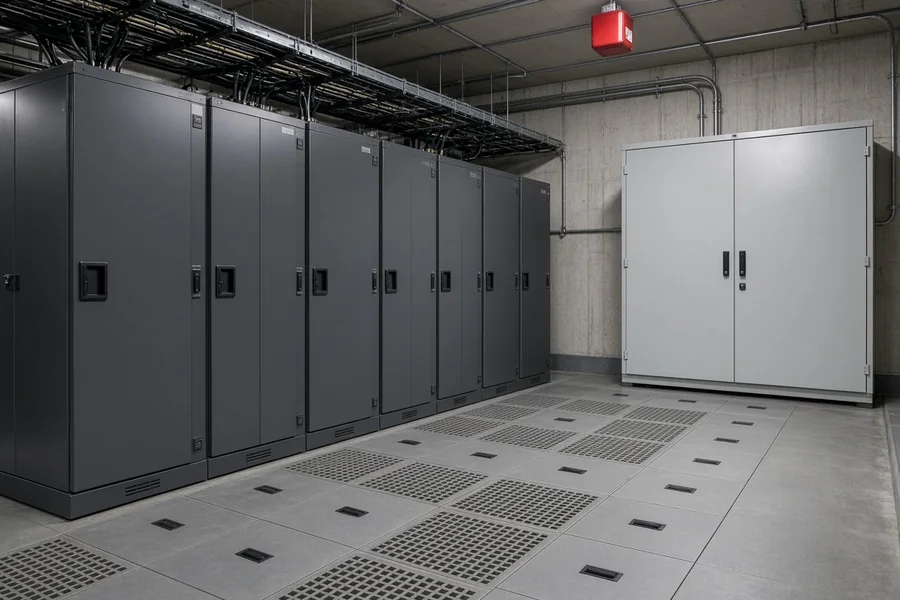
UPS & Battery Room Cooling
Room-level cooling that holds battery cabinets at a stable temperature to protect capacity and service life.
Learn More