
1-805-484-2992
Quotes - Engineering - SalesOverview
One chilled-water loop from an Advantage central chiller feeding multiple machines or process points, sized to grow with the plant.
An Advantage central chiller replaces a scatter of portable units with one refrigeration plant and a single chilled-water loop distributed to every point of use. It's the right move once several machines are drawing from separate portables, when a new building or process line is being planned from scratch, or when the plant's total cooling load has grown past what makes sense to serve machine-by-machine.
Advantage packages central capacity three ways: an indoor unit with its own reservoir and pump station for 20 to 180 tons, an outdoor air-cooled package with reservoir and pumps built in for 5 to 210 tons, and add-on chiller modules that parallel onto an existing pump-tank station to push a plant-wide system toward 300 tons. A single factory-standard machine tops out in the 180-210 ton range; higher combined capacity comes from paralleling modules or a custom-engineered plant, not from one larger box.
All three configurations share the same underlying engineering: scroll compressors (screw on the 150- and 180-ton Titan models) staged across one or more independent refrigerant zones, an evaporator sized for the fluid temperature and flow the process needs, and a factory-matched process pump moving fluid through the loop at the head the piping actually requires. What changes between the three is where the reservoir and pump live, whether the condenser sits indoors, outdoors, or is remote from the compressor package, and how the system grows if the plant's load grows with it.
| Configuration | Capacity | Best Fit |
| Indoor Central | 20 to 180 Tons | Air- or water-cooled, reservoir and pumps on one frame, inside the building |
| Outdoor Air-Cooled | 5 to 210 Tons | Reservoir and pumps included, sits outside, no mechanical room needed |
| Add-On Modules | 5 to 180 Tons per module, plant-wide to 300+ | Parallels onto a pump tank station to expand an existing system |
TYPICAL FACILITIES

Food & Beverage
Plastics Plants

Chemical Processing
Data Centers
Which Size Is Right?
Fluid temperatures across the Advantage central range are generally 20 to 80°F, on R-454B refrigerant (R-513A on a few of the largest models). Capacity is rated at 50°F leaving fluid and falls at colder setpoints, and anything below 48°F needs glycol, so confirm the setpoint during selection rather than after the unit ships.
If you're not sure whether your plant needs an indoor package, an outdoor package, or a module added to what you already have, send us the current or projected total tonnage, the building's available mechanical space (or lack of it), and whether this is a new plant or an expansion of an existing loop.
What Sets Central Cooling Apart
Capacity
5-300 Tons
One Loop, Whole Plant
A single factory-standard machine covers 5 to 210 tons; paralleling add-on modules onto a shared pump tank station is how a plant reaches 300 tons and, in custom-engineered combinations, beyond it without a scatter of separate portables.
Fluid Temp
20-80°F
Setpoint Sets the Capacity
Standard ratings reach down to 20°F leaving fluid, but capacity is rated at 50°F and shrinks as the setpoint drops, and plain water stops at 48°F - so confirm the setpoint and any glycol during selection, not after the unit ships and the process needs more cold capacity than the frame delivers.
Location
In or Out
Mechanical Room or Pad
Indoor packages need a mechanical room plus either an outdoor spot for a remote condenser or a tower connection; outdoor air-cooled units skip the room entirely and sit on a pad with reservoir and pumps already on the frame.
Growth
Add-On Ready
Built to Expand
A refrigeration-only module parallels onto a pump tank station a plant already has, adding tonnage to a working loop instead of replacing it - the right tool when today's chiller was sized for yesterday's plant.
SHOP BY CONFIGURATION
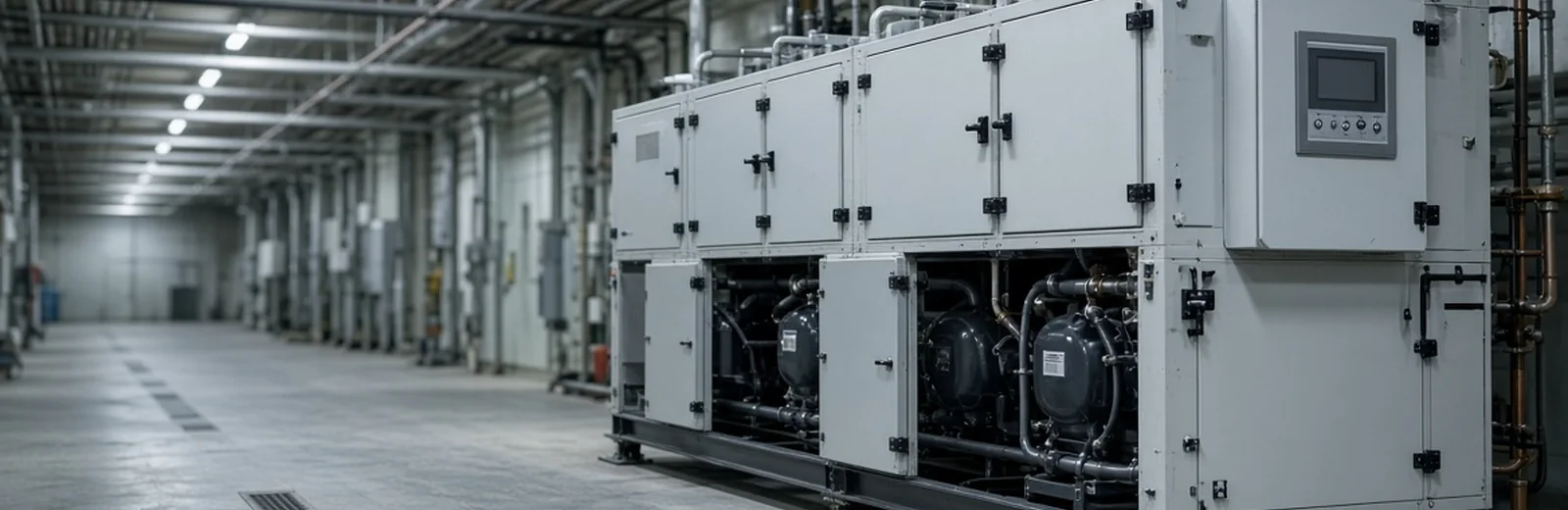
Indoor: 20 to 180 Ton
A complete mechanical-room package - compressors, evaporator, reservoir and pumps on one frame, air- or water-cooled.
Learn More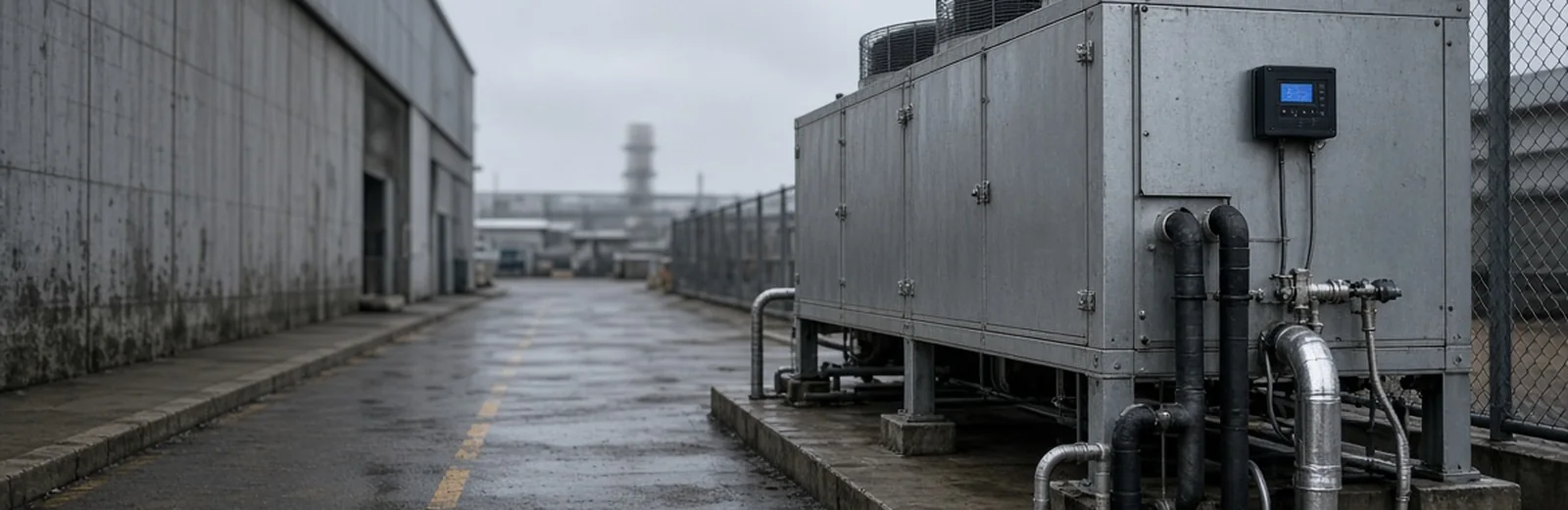
Outdoor Air-Cooled: 5 to 210 Ton
Weatherproof, reservoir and pumps included - no mechanical room, no tower, single- or dual-zone.
Learn More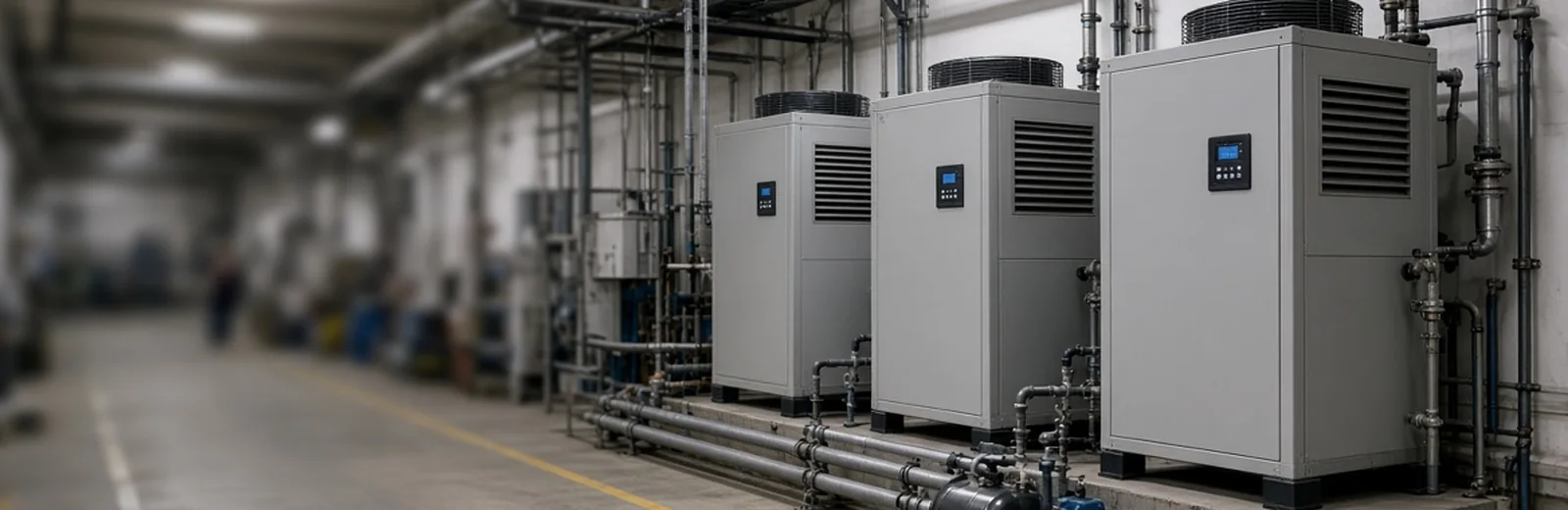
Add-On Modules: to 300 Ton
Refrigeration-only modules that parallel onto a pump tank station you already have to expand plant-wide capacity.
Learn MoreLoop flow, diversity and headers for a central plant
Call and talk it through with an engineer: 1-805-484-2992