
1-805-484-2992
Quotes - Engineering - SalesOverview
A glycol chiller is built to circulate a glycol-water solution rather than plain water, so it can deliver fluid temperatures below 32°F and survive outdoor installation through winter without draining down. Advantage's glycol packages run 1.5 to 210 horsepower and are available as indoor units for a mechanical room or outdoor units that sit on a pad year-round.
Both configurations are offered in single-zone (one fluid temperature) and dual-zone (two independent fluid temperatures from one unit) models, which matters most where different parts of a process need different glycol temperatures - product cooling and jacket cooling on the same line, for example.
Glycol changes more than the freeze point: it also carries heat less efficiently than plain water, so a glycol-rated pump, evaporator and piping have to be sized against the actual concentration the process needs, not swapped in on top of a design built for water. That's why these are their own dedicated series rather than a water chiller with glycol poured in afterward - the evaporator surface, pump curve and reservoir on an Advantage BG or BGD unit are all matched to glycol service from the factory.
| Configuration | Horsepower Range | Notes |
| Indoor Units | 1.5 to 210 HP | Mechanical-room installation, single or dual zone |
| Outdoor Units | 1.5 to 210 HP | Weatherproof, no mechanical room needed, single or dual zone |
Which Size Is Right?
Glycol percentage is a selection input, not an afterthought - it sets both the achievable low temperature and the pump/heat-transfer performance of the loop, since glycol solutions carry heat less efficiently than plain water as concentration rises. Tell us the lowest fluid temperature the process actually needs (not the lowest you can imagine wanting) and we'll recommend a percentage rather than defaulting to a round number.
See the Glycol & Low-Temperature Guide under Sizing & Selection for how percentage, freeze point and pump performance interact. Full part-number line-ups for every indoor and outdoor glycol model live on the BG series page; breweries feeding several tanks from one loop should also see the BC-SCC tank control cabinet, which gives each tank its own independent setpoint off a single central glycol chiller.
What Sets Glycol Cooling Apart
Range
1.5-210 HP
Every Duty Size
From a single NEMA 4 cabinet on one fermenter to a plant-scale unit feeding several process loops at once, without stepping outside the glycol-rated evaporator, pump and piping platform.
Setpoint
Sub-32°F Capable
Below What Water Can Do
Plain water risks freezing inside the chiller's own heat exchanger below roughly 40°F. A properly mixed glycol loop is what gets the process there without that risk - concentration is set from the process's actual required temperature.
Zoning
Single or Dual
One Unit, Two Temperatures
Advantage dual-zone models produce two independent glycol temperatures from a single frame - useful anywhere product cooling and jacket cooling on the same line need different setpoints.
Location
In or Out
Mechanical Room or Pad
Indoor units suit a plant with mechanical-room space; outdoor units are the standard for breweries and distilleries running a year-round exterior loop with no drain-down for winter.
SHOP BY INSTALLATION
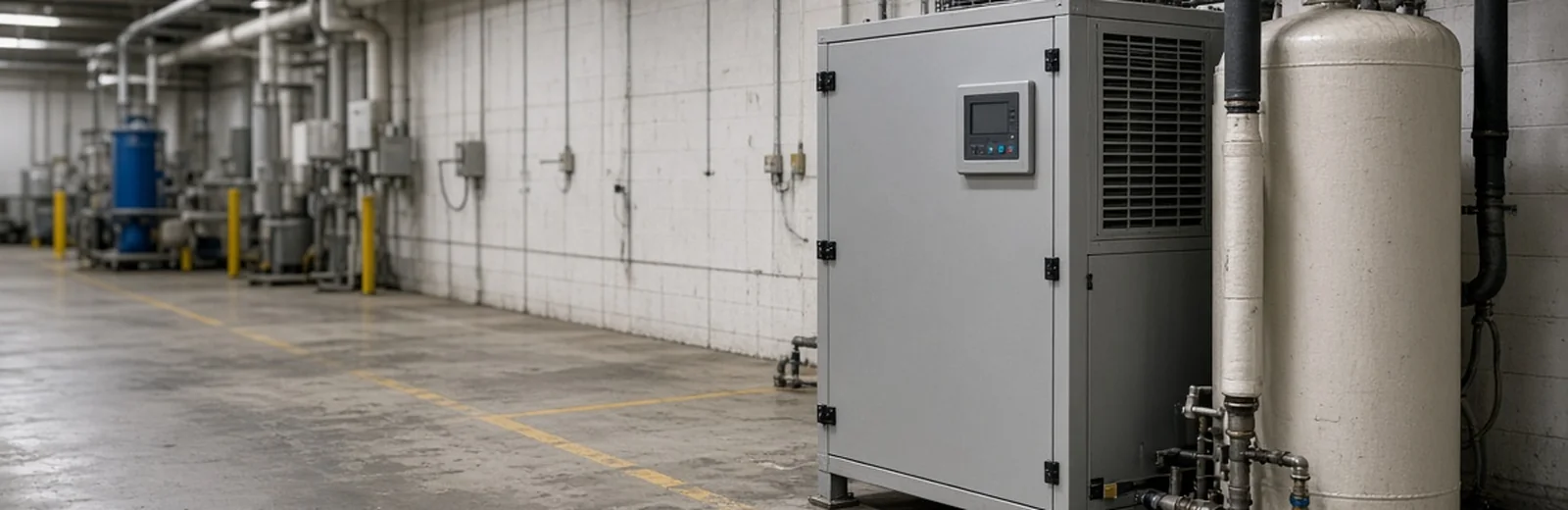
Indoor Units
Mechanical-room installation, 1.5 to 210 HP, single or dual zone, rated for glycol service throughout.
Learn More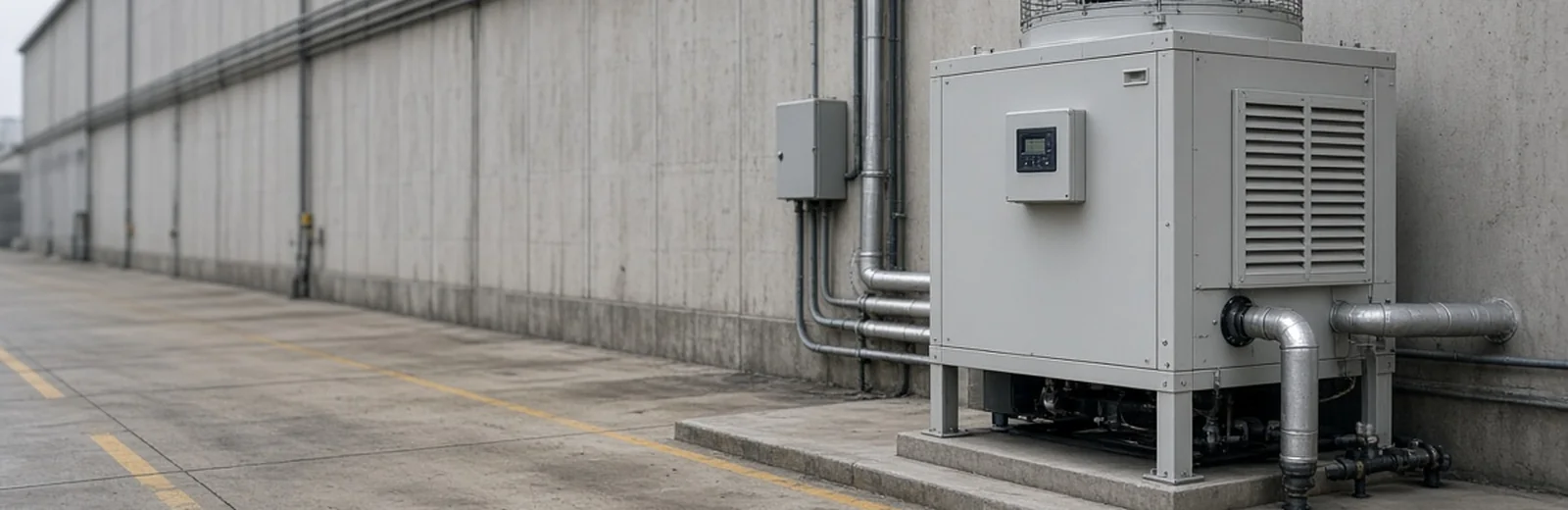
Outdoor Units
Weatherproof enclosure, no mechanical room, the standard configuration for brewery and distillery glycol loops.
Learn More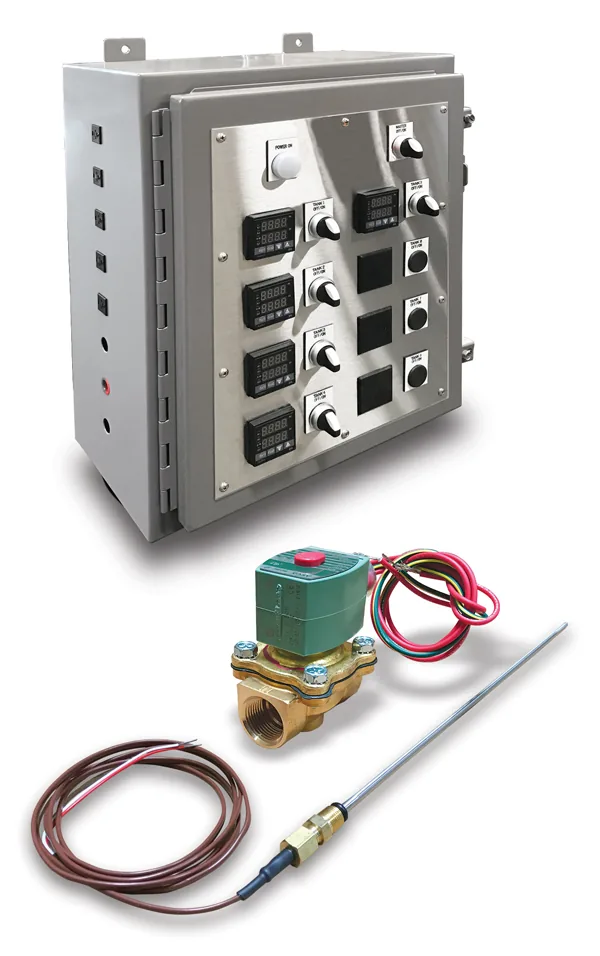
BC-SCC Tank Control
Gives each tank on a shared glycol loop its own independent setpoint from one central chiller.
Learn More