
1-805-484-2992
Quotes - Engineering - SalesROOM TEMPERATURE CONTROL
Protecting the
Backup Power Path
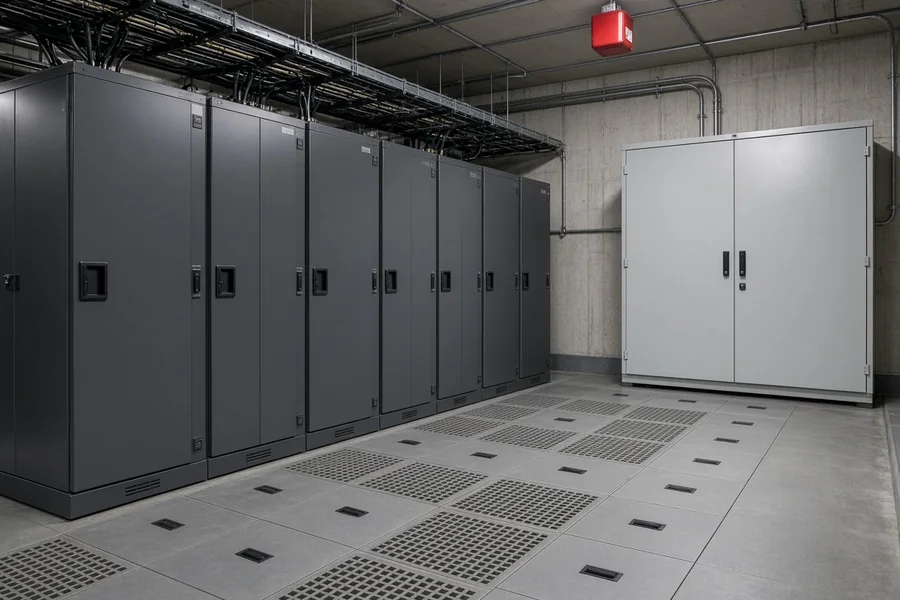
UPS and battery rooms have a narrower acceptable temperature range than most electrical or mechanical spaces, because battery service life and, in some chemistries, safety both degrade as room temperature climbs above the manufacturer's rated range. A chilled-water loop from an Advantage chiller feeding room-level cooling equipment holds that range even as UPS and charging equipment add their own heat load to the room.
Because a battery room supports the facility's backup power path, its cooling is often specified with the same reliability mindset as the backup power system itself - a cooling failure that lets the room overheat undermines the very system the UPS and batteries exist to protect.
- Battery service life and safety both depend on staying within rated room temperature
- UPS and charging equipment add continuous heat load on top of the batteries themselves
- Cooling reliability here is typically specified to match the backup power system it protects
Tell us the room's UPS and battery heat load, the required room temperature, and the facility's redundancy requirement, and we'll help size an Advantage chiller or size into an existing central chilled-water plant.
Request a QuoteSizing UPS & Battery Room Cooling
Battery capacity and service life both fall off faster at elevated room temperatures, so a UPS or battery room's cooling target is usually a stable, moderate room ambient rather than a cold process fluid. The Advantage chiller's job is holding that room temperature steady across the battery cabinet's full heat output, including during a discharge event when heat generation rises.
Battery rooms also tend to carry a stricter humidity and ventilation spec than a typical server hall, so where the cooling system interacts with room dehumidification or exhaust, we confirm that alongside the tonnage so the room's full environmental spec is met, not just its temperature.
Send Us
- Room square footage and battery cabinet heat output
- Target room temperature (typically near 68-77°F for lead-acid or lithium battery service life)
- Any humidity or ventilation requirement tied to the cooling system
- Indoor or outdoor chiller placement
TYPICAL RANGES FOR BATTERY ROOM DUTY
| Battery Type | Target Room Temp | Load Profile | Notes |
|---|---|---|---|
| Lead-acid (VRLA/flooded) | 68-77°F | Continuous, spikes on discharge | Capacity falls ~1-2% per °F above 77°F |
| Lithium-ion | 59-77°F | Continuous, spikes on discharge | Narrower band protects cycle life |
| Mixed / multi-string rooms | 68-72°F | Continuous, steady | Size to the tightest string's requirement |
Ranges are typical starting points - actual target temperature depends on your battery manufacturer's published service-life curve. Call and talk it through with an engineer: 1-805-484-2992.