
1-805-484-2992
Quotes - Engineering - SalesOverview
Self-contained Advantage units that sit next to the equipment they cool - no plant chilled-water loop required.
An Advantage portable chiller is a complete refrigeration package in one cabinet: compressor, condenser, evaporator, pump and reservoir wired and piped at the factory. It rolls up to a molding press, laser, EDM machine or lab instrument, connects to the process water lines, and runs on its own without tying into a plant-wide loop.
Advantage builds these in three practical size groups. The smallest units handle a single small tool or instrument; the mid-range covers most single-machine plastics, machine-tool and laser applications; the largest portables step in where a job needs more capacity than a single machine chiller but a central system isn't justified yet.
Every frame in the line is factory-charged, pressure-tested and shipped ready to connect - apart from the line set on remote-condenser (ARC) models, there's no field refrigerant work or start-up commissioning beyond power, water and process connections. That's the core trade portables make against a central system: less up-front engineering and a shorter lead time, in exchange for one refrigeration package per machine instead of one loop feeding many.
| Size Range | Cooling | Typical Duty |
| 1/4 to 1.5 Ton | Air-Cooled | Lab equipment, EDM, small lasers, single small presses |
| 2 to 15 Ton | Air- or Water-Cooled | Injection molding, machine tools, medium lasers |
| 20 to 40 Ton | Air- or Water-Cooled | Larger presses, multi-machine cells, higher-heat processes |
COMMON APPLICATIONS
Plastics & Molding
Machine Tools
Laser Systems
EDM
Which Size Is Right?
Fluid temperature, not just tonnage, decides the right unit: a chiller running 50°F water behaves differently than the same frame running 34°F for a low-temperature process, because low leaving-fluid temperatures cost capacity. Tell us the required leaving-fluid temperature, ambient conditions, and glycol percentage (if any) along with the heat load, and we'll match a standard model rather than guess from tonnage alone.
Air-cooled Advantage portables are simplest to install - no cooling tower or plant water needed - and are the default choice unless the equipment room is tight on ventilation or the ambient runs hot. Water-cooled units trade a tower or plant water connection for a smaller footprint and steadier performance in a hot mechanical room. Remote-condenser (ARC) variants keep the compressor and pump at floor level while the condenser mounts outdoors or on a roof - worth asking about anywhere the production floor can't tolerate a fan's noise or heat.
What Sets Portable Cooling Apart
Range
1/4-40 Tons
Three Practical Steps
Fractional-tonnage bench units, mid-range 2 to 15 ton frames for most single-machine duty, and 20 to 40 ton units for larger presses or small multi-machine cells.
Cooling
Air or Water
Match the Mechanical Room
Air-cooled is the simplest install with no tower or plant water needed; water-cooled trades that connection for a smaller footprint and steadier performance in a hot room.
Setup
Self-Contained
Compressor, Pump & Tank in One
Every air- and water-cooled frame ships factory-charged and pressure-tested with its pump and reservoir already piped in - no field refrigerant charging, no plant loop to tie into.
Ready
Ships to Run
Connect and Go
Power, process water and a drain are all a portable needs on site - the shortest path from order to a running chiller of any configuration Advantage builds.
SHOP BY CAPACITY
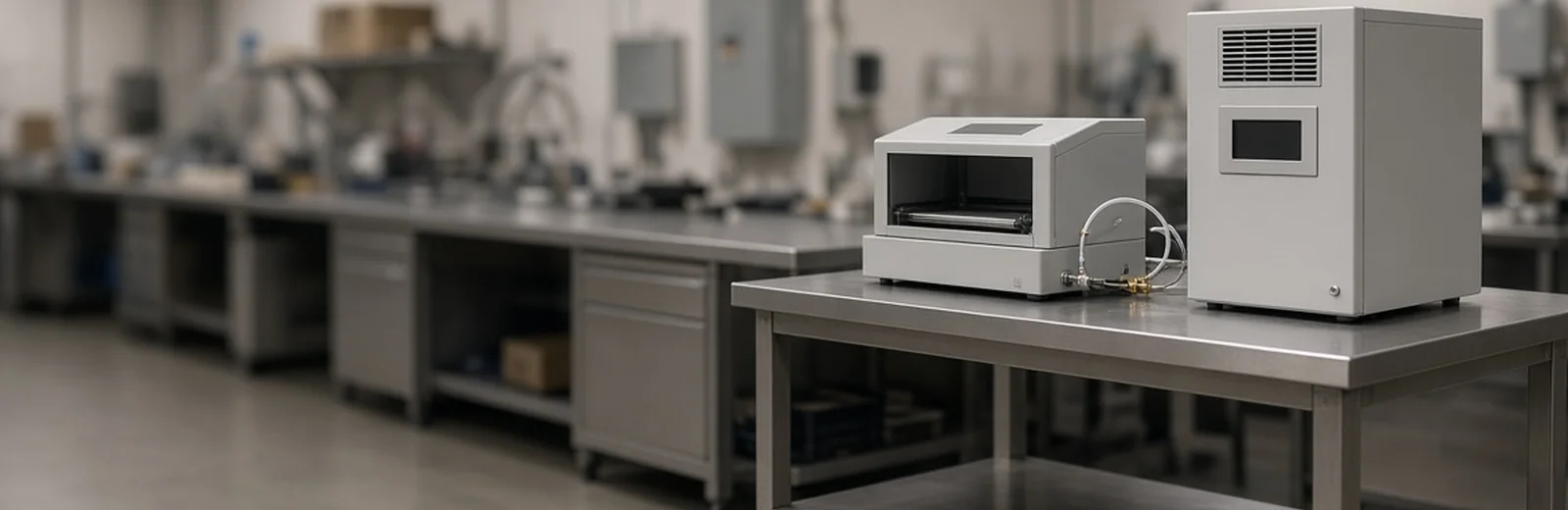
1/4 to 1.5 Ton
Single-phase, air-cooled-only units for lab instruments, small EDM tanks and point-of-use loads.
Learn More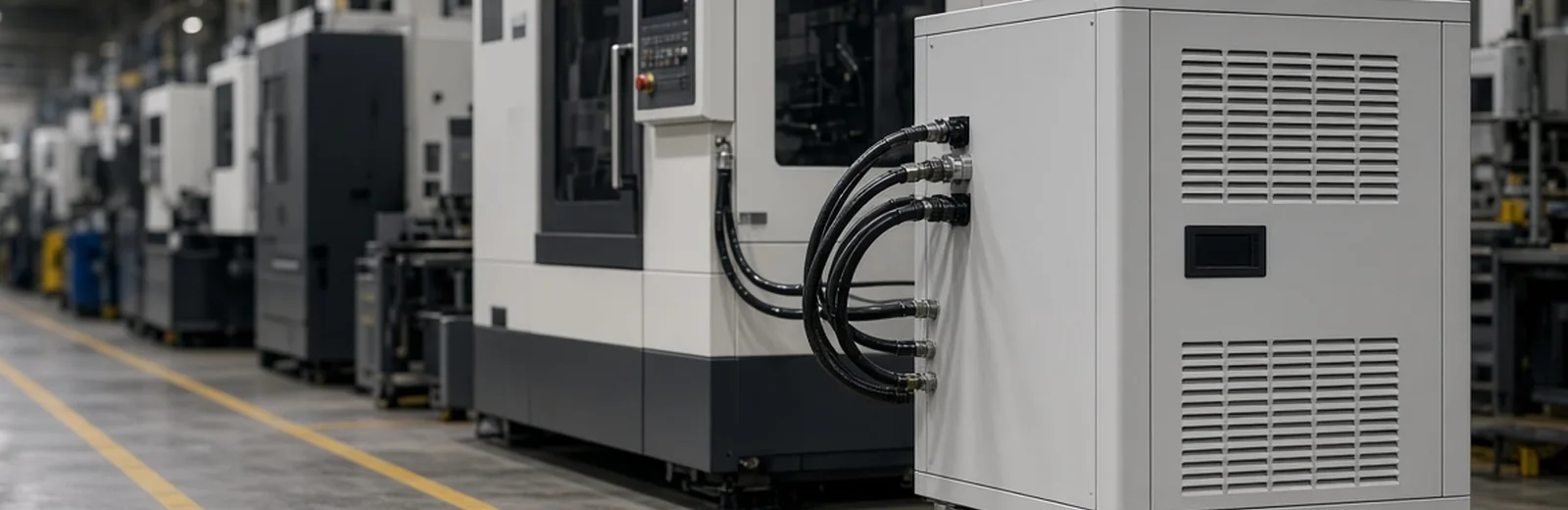
2 to 15 Ton
The workhorse range for single-machine plastics, machine-tool coolant and mid-size process cooling.
Learn More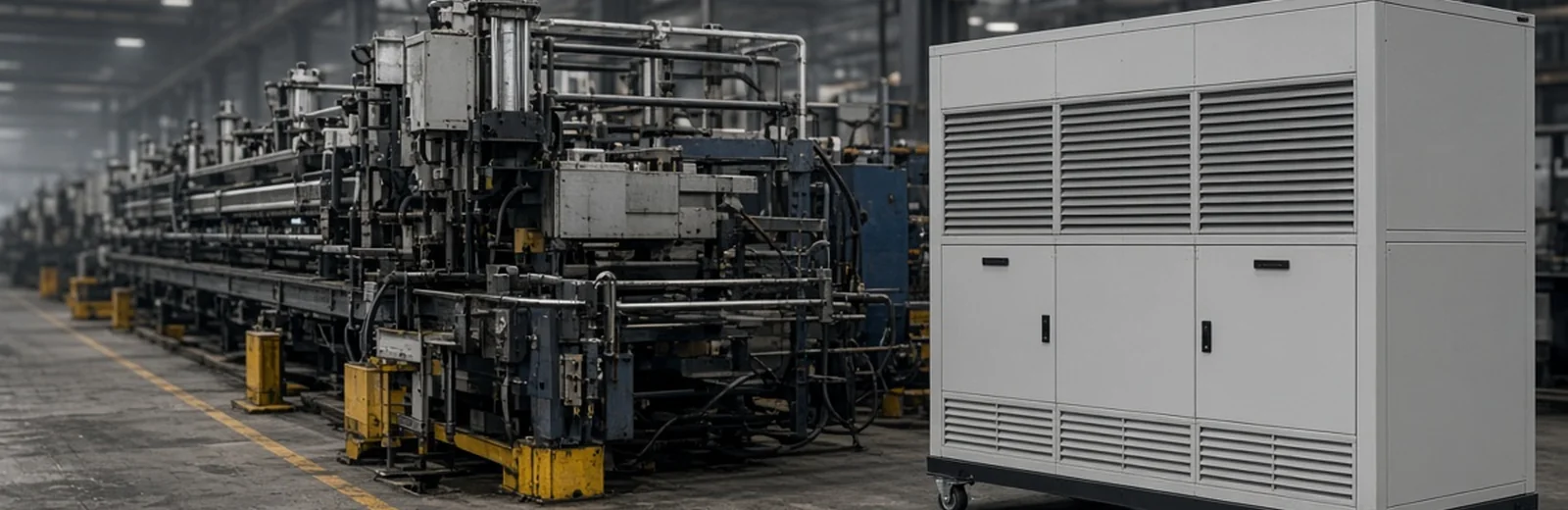
20 to 40 Ton
Larger presses and small multi-machine cells where the load has outgrown a mid-range portable.
Learn More