
1-805-484-2992
Quotes - Engineering - SalesRESONATOR & OPTICS COOLING
Stable Fluid,
Stable Beam
A laser resonator's optical alignment and output power are both sensitive to its own temperature, so the chiller cooling it needs to hold a stable fluid setpoint, not just an average one - small swings in leaving fluid temperature can show up as drift in beam quality or cut edge finish over the course of a shift.
Cutting heads and focusing optics on the same machine typically draw from the same chiller loop and add their own, smaller heat load. Because resonator cooling tends to be the more temperature-sensitive of the two, the chiller's control stability matters more here than raw tonnage - most laser cooling loads fall well within an Advantage portable chiller's range.
- Resonator temperature stability drives beam quality and cut consistency
- Cutting head and optics cooling typically share the resonator's chiller loop
- Control stability matters more than raw tonnage for most laser loads
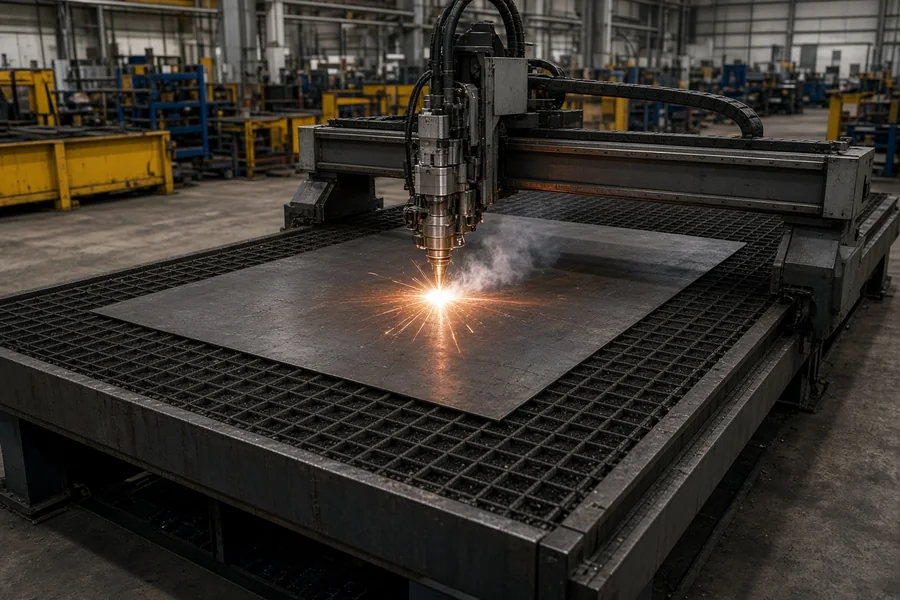
Manufacturers publish a required fluid temperature and flow rate for their laser systems; give us those numbers along with ambient conditions at the machine and we'll match an Advantage unit that holds that setpoint reliably.
Request a QuoteSizing Laser Resonator Cooling
A laser resonator's beam quality and cut consistency depend on holding its internal temperature within a tight band - typically a degree or two - because thermal drift changes the resonator's optical alignment and output power. This is a stability problem more than a raw-tonnage one: when we select an Advantage chiller, its control precision matters as much as its capacity.
Fiber and CO2 lasers have different cooling profiles and sensitivities, and many machine builders publish a specific coolant temperature and flow-rate spec for their resonator - matching that spec, not just supplying "cold water," is what keeps warranty and cut quality intact.
Send Us
- Laser type (fiber, CO2) and rated power
- Manufacturer's specified coolant temperature, flow rate and stability tolerance
- Ambient shop temperature and seasonal swing
- Indoor or outdoor chiller placement
TYPICAL RANGES BY LASER TYPE
| Laser Type | Leaving Fluid Temp | Stability Tolerance | Notes |
|---|---|---|---|
| Fiber laser (low-mid power) | 65-75°F | ±1-2°F | Confirm OEM spec before quoting |
| Fiber laser (high power) | 60-70°F | ±1°F | Tighter control, higher flow rate |
| CO2 laser | 60-70°F | ±1-2°F | Often dual-circuit (resonator + optics) |
Ranges are typical starting points - always confirm against the laser manufacturer's published coolant spec before finalizing a unit. Call and talk it through with an engineer: 1-805-484-2992.