
1-805-484-2992
Quotes - Engineering - SalesCOLD-CHAIN STORAGE
No Room for
an Excursion
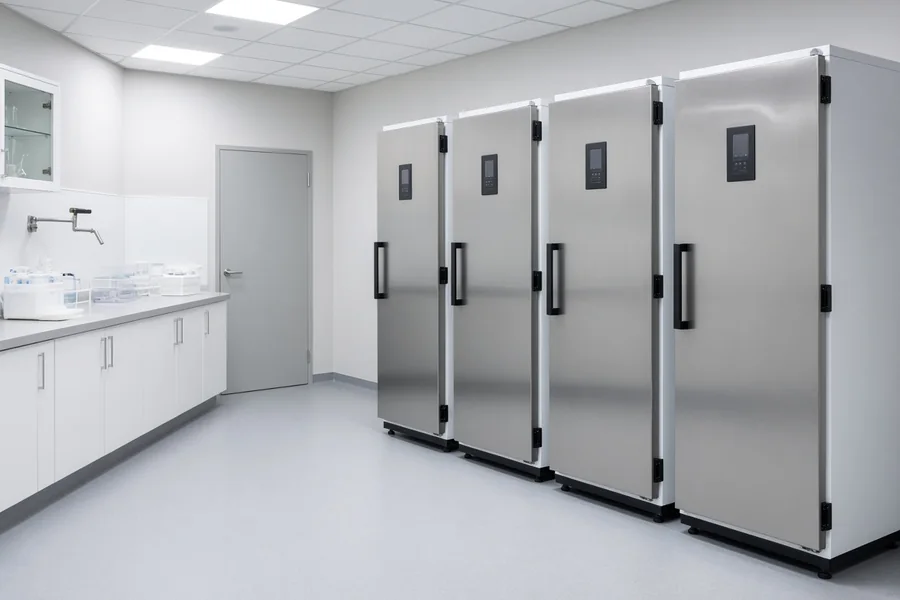
Vaccines, biologics and other temperature-sensitive pharmaceutical inventory are typically stored within a narrow, regulated temperature range, and an excursion outside that range - even briefly - can mean the stored product has to be discarded. Chilled fluid supporting cold-storage rooms or units needs to hold that range continuously, including through defrost cycles, door openings, and periods of high ambient heat gain.
Because the cost of a failure here is the stored inventory itself, not just process downtime, reliability and, frequently, redundancy or backup capacity are central to sizing this application - more so than in most industrial cooling.
- Cold-chain storage requires continuous temperature stability, not just an average setpoint
- A temperature excursion can mean discarding the stored biological inventory
- Backup capacity is a common requirement given the cost of a cooling failure
Tell us the required storage temperature, the room or unit's heat load, and whether backup capacity is required, and we'll size an Advantage chiller with the continuity this application needs.
Request a QuoteSizing Biological Storage Cooling
Biological storage cooling covers a range of duties - walk-in cold rooms, blood bank refrigeration, and condenser support for ultra-low-temperature (ULT) freezers - each with its own target temperature and consequence for a temperature excursion. Sample and specimen inventories can represent years of irreplaceable material, which makes reliable, correctly sized cooling a higher-stakes decision than a comparable industrial cold-storage duty.
Where an Advantage chiller supports ULT freezer condensers rather than cooling a room directly, sizing follows the freezer manufacturer's condenser heat-rejection spec rather than a room-volume calculation - tell us which type of storage you're cooling and we'll size to the right method.
Send Us
- Storage type (walk-in cold room, blood bank, ULT freezer condenser support)
- Target storage temperature and room volume, or freezer condenser heat-rejection spec
- Backup/redundancy requirement
- Indoor or outdoor chiller placement
TYPICAL RANGES BY STORAGE TYPE
| Storage Type | Target Temp / Fluid Temp | Load Profile | Notes |
|---|---|---|---|
| Walk-in cold room / blood bank | 35-46°F | Continuous, steady | Room-volume-based sizing |
| Pharmaceutical cold storage | 36-46°F | Continuous, steady | Confirm any regulatory monitoring requirement |
| ULT freezer condenser support | Per OEM condenser spec | Continuous, steady | Sized off freezer manufacturer's heat-rejection data |
Storage type, room volume and the freezer maker's condenser specification size the duty; these figures only show the usual span.
Call and talk it through with an engineer: 1-805-484-2992.
Protecting stored inventory from an excursion
Call and talk it through with an engineer: 1-805-484-2992