
1-805-484-2992
Quotes - Engineering - SalesFERMENTATION, PASTEURIZATION & PACKAGING
Holding the
Temperature Window
Food and beverage production runs on temperature windows, not just temperatures: a fermentation has to stay inside a yeast strain's tolerance, a pasteurized product has to drop below the food-safety danger zone within a set time, and a packaging line has to hold hot-melt adhesive at a workable set point all shift long. Missing any of those windows costs product, not just efficiency.
Most of that control comes from a chilled or glycol fluid loop, fed by an Advantage chiller sized for the actual heat load and the actual low-temperature requirement, not a generic plant chilled-water supply. A jacketed fermenter, a plate-and-frame pasteurizer, or an immersion chill tank each reject heat differently, and the Advantage chiller feeding them needs to match that profile.
Most food and beverage duty runs on a glycol loop, so the Advantage chiller can hold temperatures below what plain water allows - a fermenter crash, a bright tank, or a post-pasteurization cooldown that has to clear the danger zone on time. The same loop often serves several points at once, which is why the chiller is sized for the combined peak rather than one vessel at a time.
Plant conditions matter as much as tonnage. Wash-down areas, outdoor pads, and loops that run close to product-contact surfaces all shape the cabinet, the fluid and the pump package, and are settled before a model is picked.
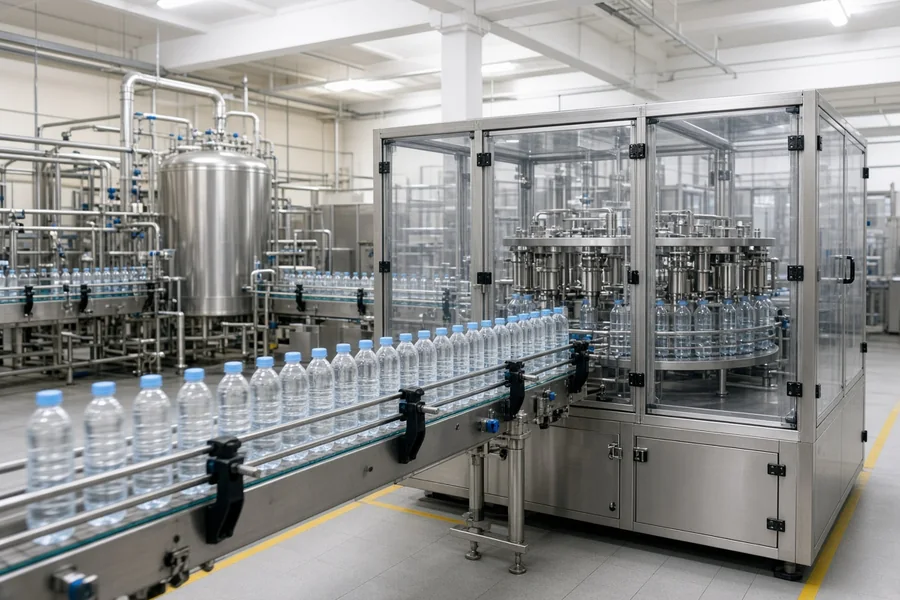
Send us the heat load and the required fluid temperature, or the process data to work it out, and tell us which step of your line it serves. We will match an Advantage chiller to the actual profile.
Request a QuoteCOMMON APPLICATIONS

Fermentation

Post-Pasteurization

Packaging

Poultry Processing
Food and beverage production runs on temperature windows. Miss the fermentation profile, the cooldown time or the seal temperature and the cost is product, not efficiency - so the chiller is sized to the window it has to hold.
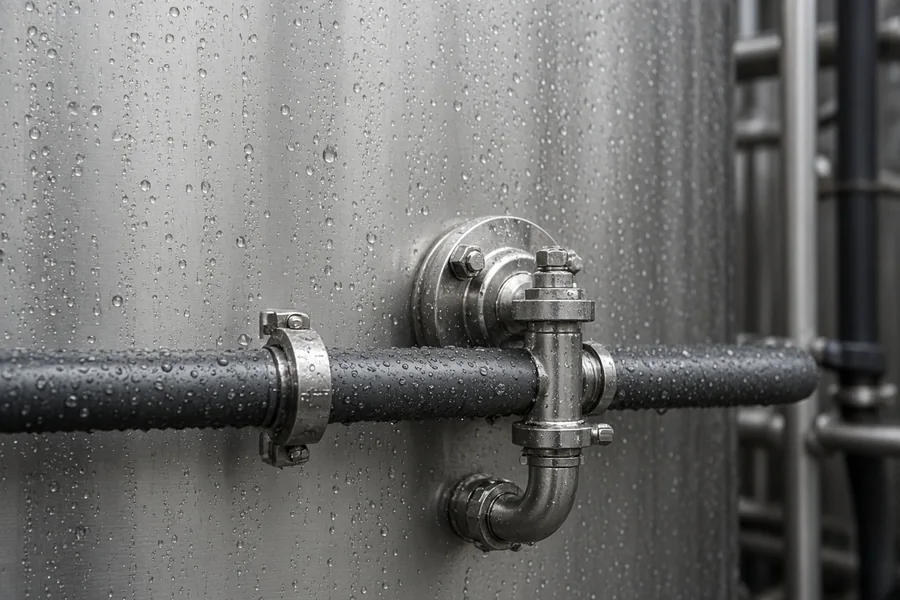
Brewing & Beverage
Fermentation and Post-Pasteurization
- Fermentation Jacket Cooling
- Post-Pasteurization Cooldown
- Shared Glycol Loops for Many Tanks
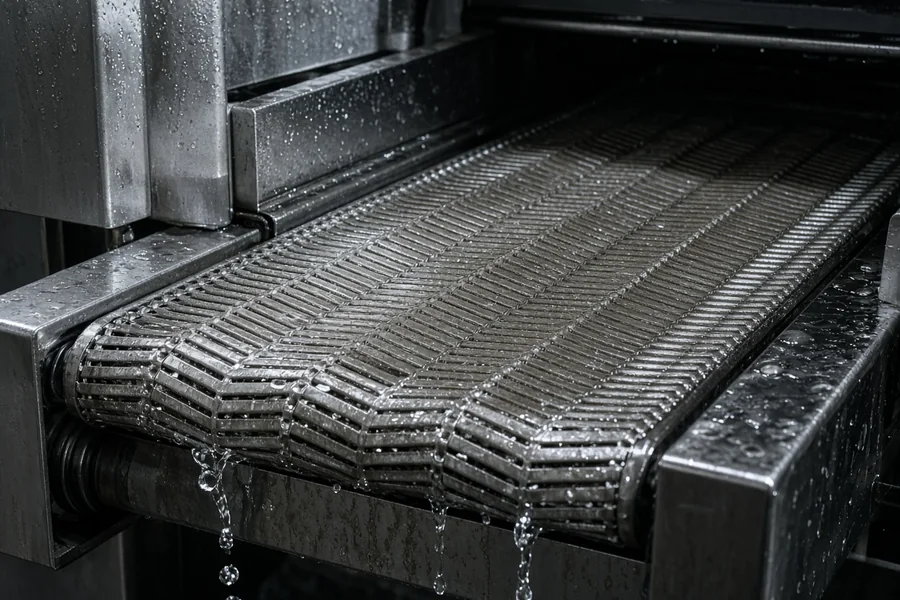
Processing & Packaging
Chill Tanks and Packaging Lines
- Poultry Immersion Chill Tanks
- Seal-Bar and Hot-Melt Cooling
- Continuous Plant-Wide Loads
What Makes Food & Beverage Cooling Different
Setpoint
30-55°F
Process-Specific, Not Generic
Fermentation, pasteurization cooldown, packaging and poultry chilling each call for a different leaving fluid temperature - sizing off one generic chilled-water number instead of the actual process step is a common and avoidable mistake.
Duty cycle
Batch & Continuous
Both Show Up On One Site
A single food or beverage plant often runs both duty types at once - a batch fermentation tank spiking hard on one line while a continuous chill tank draws a flat load nearby - and the chiller has to be sized for the worst-case overlap.
Fluid
Contact-Risk Aware
Food-Grade Where It Matters
Anywhere the process fluid runs near product-contact surfaces or a wash-down area, food-grade fluid and materials of construction have to be confirmed - mixing an industrial loop with a food-contact-risk one is a real, avoidable mistake.
Sanitation
Wash-Down Ready
Built For The Environment
Process rooms get hosed down and CIP lines run hot caustic and acid rinses nearby. Equipment mounted near the process floor needs to tolerate that environment, not just the process fluid itself.
Sizing a Food & Beverage Process Loop
Three numbers get a quote moving fast: the peak heat load in tons, the leaving fluid temperature the process needs, and whether the unit will sit indoors near the process floor or outdoors on a pad. Everything else - fluid type, pump/reservoir sizing, indoor vs. outdoor cabinet construction - follows from those three.
Most single-line duty fits an Advantage portable chiller through roughly 40 tons; a multi-line plant or a packaged central system running several process points at once typically lands in the 40 to 180-210 ton range. Above that, a modular or custom system is the right conversation to have with an application engineer rather than picking a model off a spec sheet.
Send Us
- Peak heat load (tons) or the process data to calculate it
- Required leaving fluid temperature
- Indoor or outdoor installation
- Whether the fluid loop runs near product-contact surfaces
- Which application below matches your line
DIG DEEPER BY APPLICATION
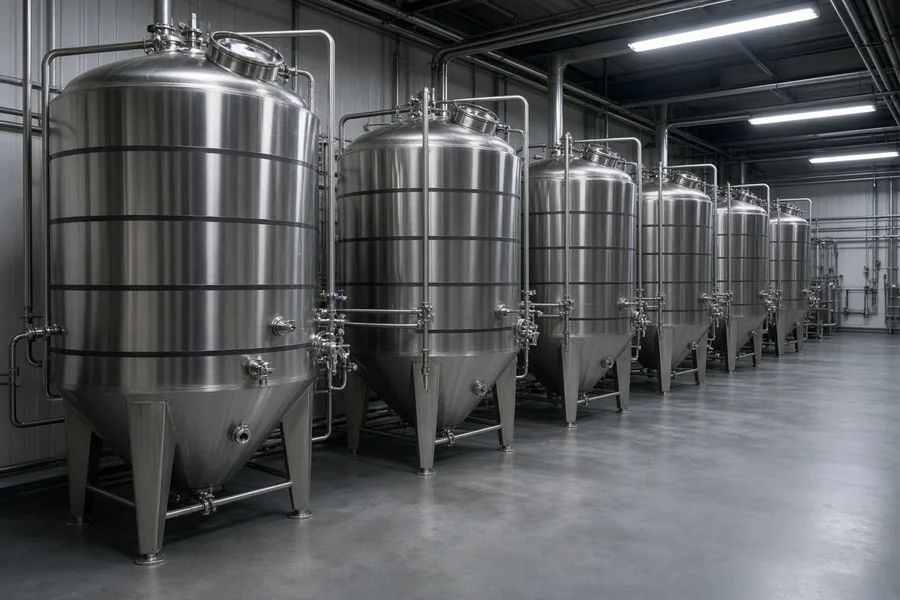
Fermentation
Jacketed vessel cooling that holds a steady setpoint through the fermentation cycle.
Learn More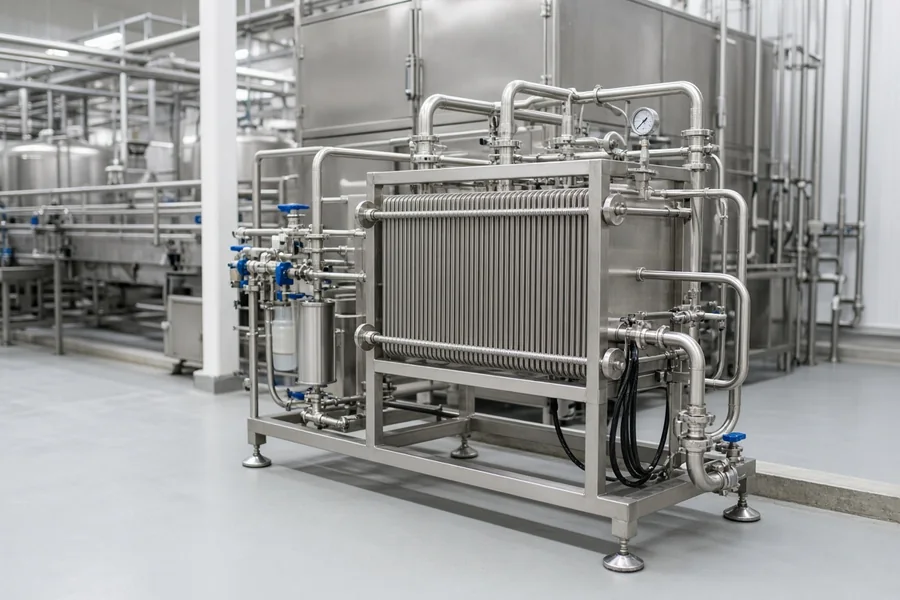
Post-Pasteurization
Rapid cooldown after pasteurization to clear the food-safety window and protect product quality.
Learn More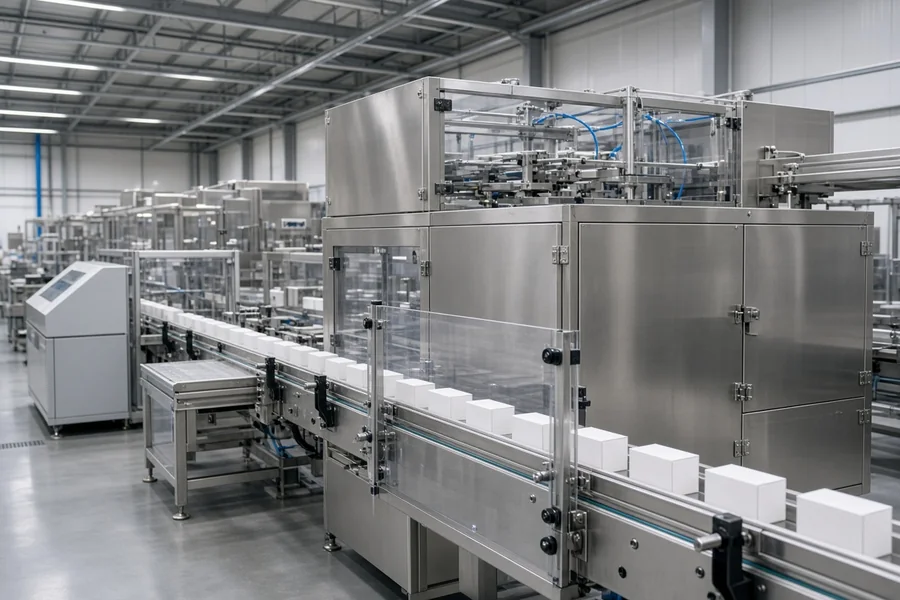
Packaging
Cooling filled product and containers before labeling and palletizing to protect product and package integrity.
Learn More