
1-805-484-2992
Quotes - Engineering - SalesOverview
The Advantage chiller line is organized into seven series, and each one answers a different installation question rather than simply covering a different tonnage. Two chillers of the same capacity can belong to different series because one sits beside a molding press, one sits in a mechanical room, and one sits on a pad outside the building. Picking the series first narrows a catalog of 173 standard models to a handful before any spec table comes out.
Start with where the heat is and where the chiller can go. A single machine or a short line that needs its own cooling points to the MG Series, the Advantage portable platform from the 1/4-ton M1 units to the 40-ton MG frame. A whole plant loop served from one location points to a central chiller: the Titan Series when there is room indoors, the OACS Series when the chiller has to live outdoors.
Plants that already run a pump tank station, or expect to add load in steps, often do better with refrigeration-only modules than with one larger packaged chiller. The APT-RC modules reject heat through a remote air-cooled condenser, the WPT modules to tower or city water, and both parallel onto the station a plant already has. Below about 48°F on plain water the evaporator is at risk of freezing, so colder duty moves to the BG Series glycol chillers, and a brewery or winery running several jacketed tanks off one glycol loop adds a BC-SCC tank control cabinet to give each tank its own set point.
How the Advantage Series Divide
Location
Beside the Machine
MG Portable
Self-contained with its own pump and reservoir, 1/4 to 40 tons. Needs power and a process connection, and moves with the equipment it cools.
Location
One Plant Loop
Titan or OACS
Central packages that serve many machines from one place: Titan indoors from 20 to 180 tons, OACS outdoors on a pad from 5 to 150 tons.
Growth
Add Capacity in Steps
APT-RC or WPT
Refrigeration-only modules, 5 to 180 tons each, that parallel onto a pump tank station. Air-cooled with a remote condenser, or water-cooled.
Temperature
Below 48°F
BG and BC-SCC
BG glycol chillers run a 25-30°F loop. The BC-SCC cabinet splits that loop across 2 to 8 tanks with independent control.
Narrowing to One Series
The capacity ranges overlap on purpose. A 30-ton load could be an MG-30A beside the machine, a Titan in the mechanical room, an OACS on the pad outside, or a 30-ton module on an existing pump tank station. The deciding questions are floor space, whether plant water is available for a water-cooled condenser, how many machines share the load, and whether the plant expects to add capacity later. Tonnage only settles the model once the series is chosen.
Temperature settles the rest. Anything that has to run below about 48°F belongs on glycol, which moves the selection to the BG Series regardless of where the unit sits. Each series page lists every standard Advantage model with its capacity, electrical data and connections, so once the series is clear the exact model usually follows from the load. When the choice is close, call and talk it through with an engineer: 1-805-484-2992.
Send Us
- Heat load in tons or BTU/hr, or the equipment being cooled
- Required leaving fluid temperature
- Indoor, outdoor, or beside the machine
- Plant water or tower available (yes / no)
- Any existing Advantage model number
SELECTION GUIDES
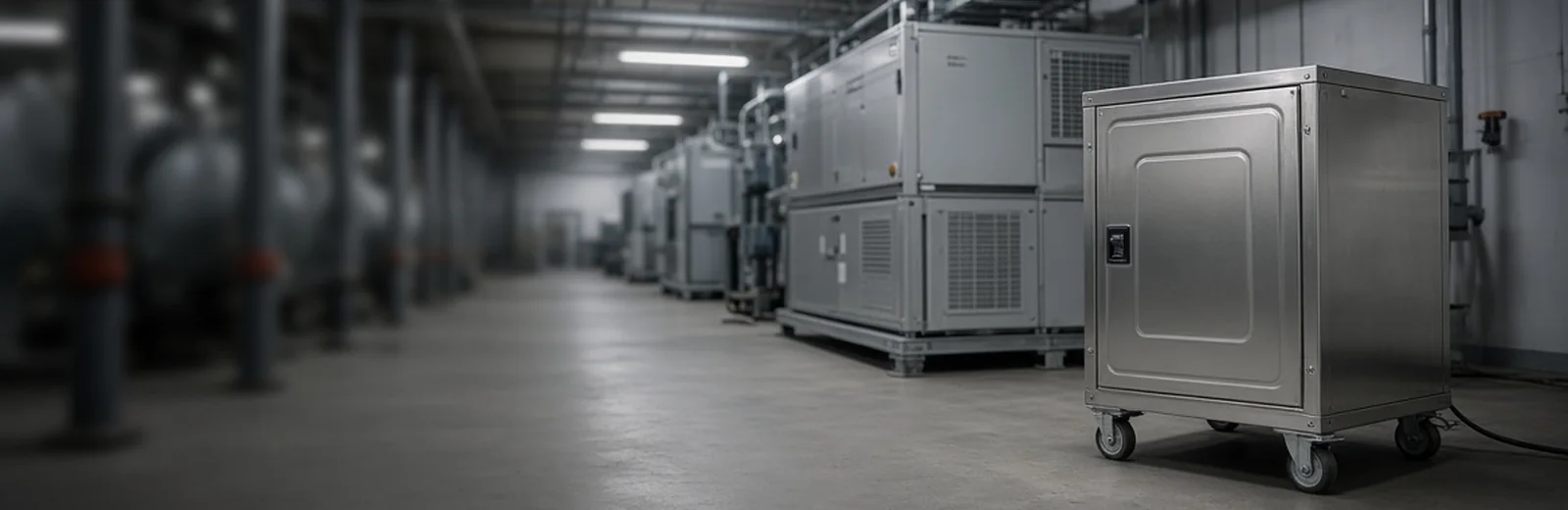
Portable vs Central Chillers
When one chiller per machine makes sense, and when a plant loop pays for itself.
Learn More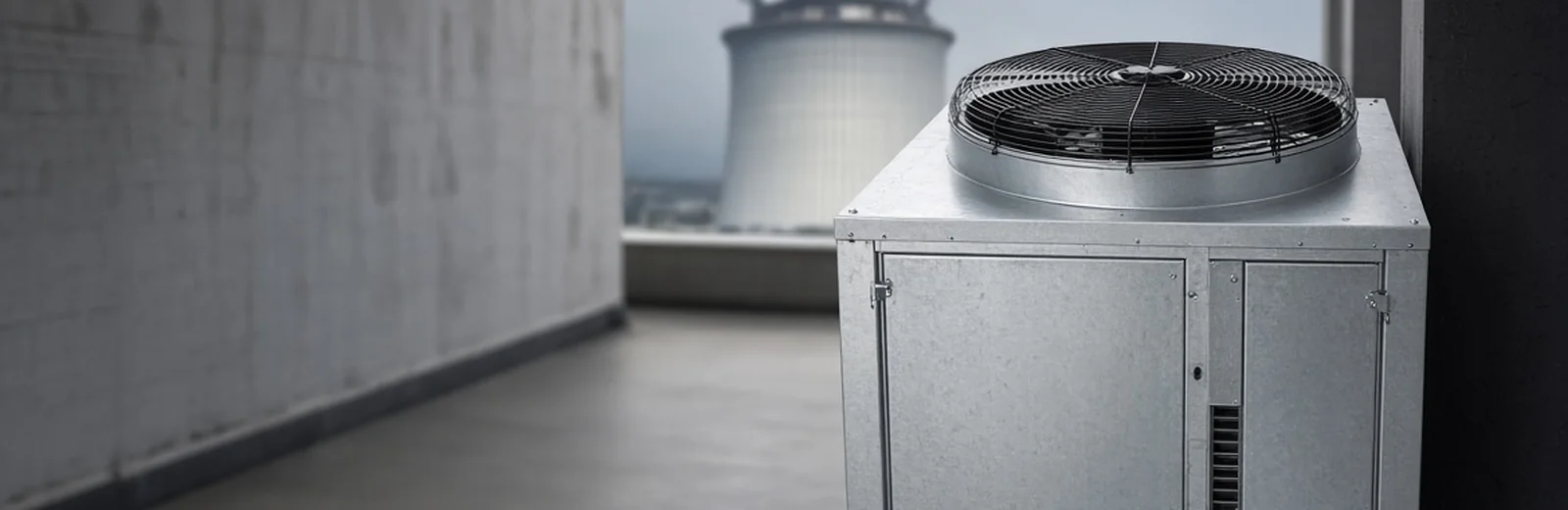
Air-Cooled vs Water-Cooled
Where the heat goes decides between OACS and Titan, and between APT-RC and WPT modules.
Learn More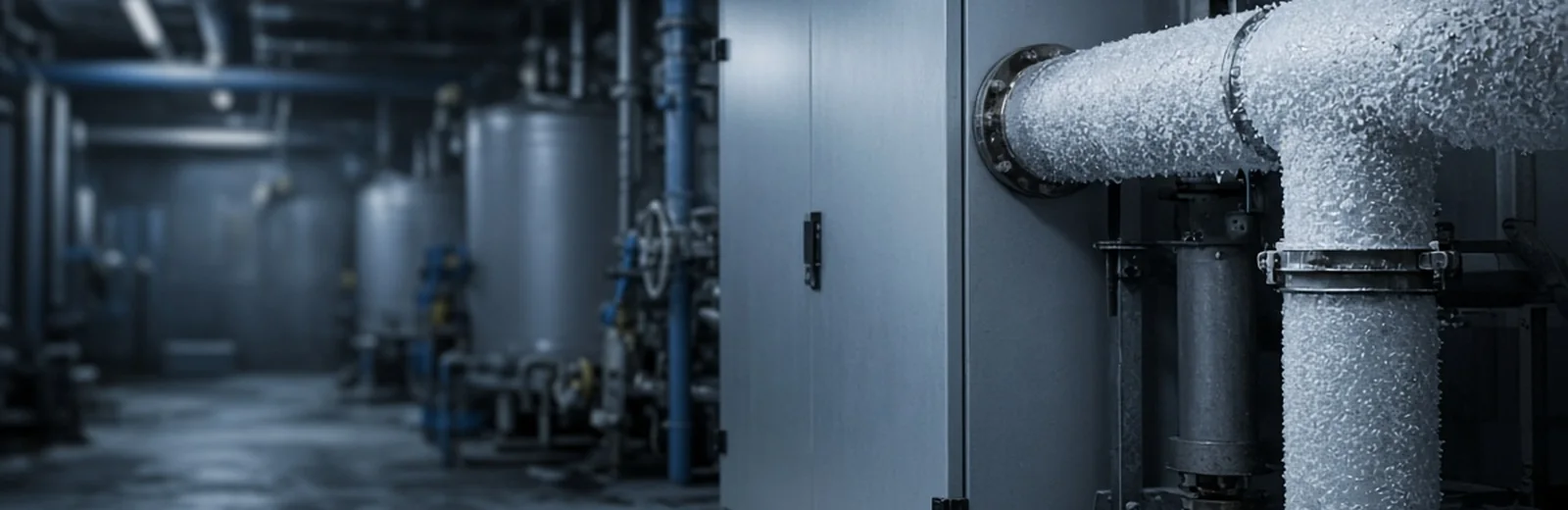
Glycol & Low-Temperature Guide
How much glycol a loop needs, and when a BG Series chiller is the right choice.
Learn More