
1-805-484-2992
Quotes - Engineering - SalesSEAL-BAR & ADHESIVE COOLING
Consistent Seals
at Line Speed
Form-fill-seal equipment uses cooling water to set seal bars and cool film after each seal cycle, and running that water too warm slows the achievable line speed or produces inconsistent seals - both of which show up as downtime or rejected product on a packaging line that's otherwise running fine.
Hot-melt adhesive systems have the opposite problem in the same process: the adhesive has to stay hot enough to apply, then cool fast enough after application to bond the case or carton before it moves on. A dedicated Advantage chiller loop for the cooling side keeps that timing consistent independent of ambient plant temperature or how hard the rest of the building's cooling is working.
- Seal-bar and film cooling water for form-fill-seal equipment
- Cooldown of hot-melt adhesive after application, independent of plant temperature
- Moderate, steady loads - often a good fit for a dedicated Advantage portable chiller
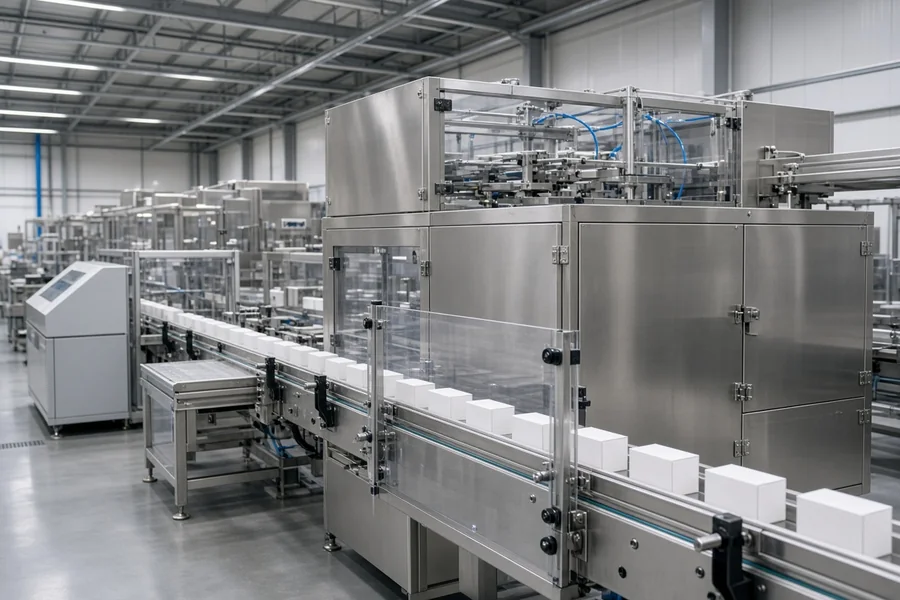
Packaging loads are usually modest tonnage but demand tight, repeatable fluid temperature - an Advantage MG portable chiller dedicated to the line is often the simplest fit. See Portable Chillers for single-line packages sized to this kind of steady, moderate load.
Request a QuoteSizing Packaging Line Cooling
Packaging-stage cooling isn't about a food-safety window the way pasteurization is - it's about getting filled product and containers to a temperature where labels adhere properly, cartons don't sweat, and product doesn't shift or settle before it's sealed and palletized. That makes the target leaving fluid temperature milder than upstream process cooling, but the throughput and continuous nature of the load still has to be sized correctly.
Packaging lines commonly run continuously through a shift rather than in the sharp batch spikes typical of pasteurization or fermentation, so total tonnage is usually closer to a steady average - but line speed changes and product mix shifts still need to be accounted for in the peak.
Send Us
- Line throughput and target product/container temperature at the packaging step
- Continuous or shift-based operation
- Whether condensation control (label adhesion, carton sweat) is a factor
- Indoor or outdoor installation
TYPICAL RANGES BY PACKAGING STEP
| Packaging Step | Leaving Fluid Temp | Load Profile | Notes |
|---|---|---|---|
| Container/bottle pre-label cooling | 45-55°F | Continuous, steady | Prevents label adhesion failure |
| Filled-product cooling before sealing | 38-48°F | Continuous, moderate | Protects product texture/shelf life |
| Cold-chain staging before palletizing | 34-40°F | Continuous, steady | Maintains cold-chain compliance |
Ranges are typical starting points - actual leaving fluid temperature depends on your specific product, packaging material and line speed. Call and talk it through with an engineer: 1-805-484-2992.